
Key Takeaways
- Ice dam resistance, wind uplift, and freeze-thaw durability are the three most important shingle features for New England homes.
- CertainTeed Landmark offers 21 color options — ideal for matching New England's diverse architectural styles from colonials to Cape Cods.
- GAF Timberline HDZ with WindProven accessories offers unlimited wind speed warranty — the best choice for coastal homes exposed to nor'easters.
- Impact resistance (Class 4) shingles can reduce homeowner insurance premiums in some states and protect against hail damage.
- Your installer's CertainTeed certification tier determines your SureStart PLUS coverage — ShingleMaster PREMIER unlocks the 5-STAR tier with 50-year non-prorated materials, 30-year workmanship, and tear-off included.
Table of Contents▼
By Diana Kowalski, Home Improvement Editor | Updated February 2026
If you've spent any time researching roofing shingles, you've probably noticed that most comparison guides are written for a national audience. They compare CertainTeed, GAF, and Owens Corning based on wind ratings, algae warranties, and price — but they rarely account for the specific conditions that New England homeowners face every winter.
This guide is different. We focus on the climate challenges unique to Massachusetts, Connecticut, Rhode Island, New Hampshire, and the rest of the region — and which shingle features and brands are best equipped to handle them. We also connect the shingle choice to the roof + solar bundle decision that many New England homeowners are making in 2026.
What Makes New England Roofing Different
New England's climate is genuinely demanding on roofing materials in ways that most regions don't experience simultaneously. Understanding these challenges helps explain why some shingle features matter more here than they do in, say, Texas or California.
Temperature extremes and freeze-thaw cycles. Interior New England regularly sees temperatures swing from -10°F in January to 95°F in July. That's a 105-degree range. More critically, the shoulder seasons — October through December and February through April — bring 100 or more freeze-thaw cycles per year in places like central Massachusetts, northern Connecticut, and inland Rhode Island. Each cycle creates stress on roofing materials as moisture expands and contracts.
Nor'easters and high-wind events. The region averages 3 to 5 nor'easters per season, with coastal areas routinely seeing wind gusts exceeding 60 mph. In exposed locations — Cape Cod, the South Shore, Narragansett Bay, and the Connecticut shoreline — nor'easter gusts can reach 80 to 100+ mph. Wind uplift, not just wind speed, is the real concern: it's the suction effect that lifts shingles from the roof deck.
Heavy, wet snow loads. New England snow is notorious for being wet and dense. A significant snow event can create roof loads of 40 to 60 pounds per square foot in extreme cases. While snow load is primarily a structural concern (rafters, trusses), the moisture that comes with it — especially when snow sits against flashing, valleys, and eaves — tests the shingle system's waterproofing.
Coastal salt air. Properties within a few miles of saltwater — and there are thousands of them on Cape Cod, the South Shore of Massachusetts, the Rhode Island coast, and the Connecticut shoreline — face an additional challenge: salt air accelerates the oxidation of metals (flashings, fasteners) and can degrade some roofing materials over time.
Humid summers and algae growth. Climate change has brought warmer, more humid summers to New England. North-facing roof planes and shaded sections are increasingly prone to the black streaking caused by Gloeocapsa magma algae. This doesn't structurally damage shingles, but it's visually significant and can affect resale value.
These five factors — freeze-thaw stress, high winds, snow loads, salt air, and algae — are why "shingle features that are nice to have nationally become must-haves in New England," as one roofing contractor we interviewed put it.
Ice Dams: The #1 New England Roofing Challenge
Ice dams deserve their own section because they're responsible for a disproportionate share of roof damage claims in New England — and because many homeowners misunderstand what role the shingle plays.
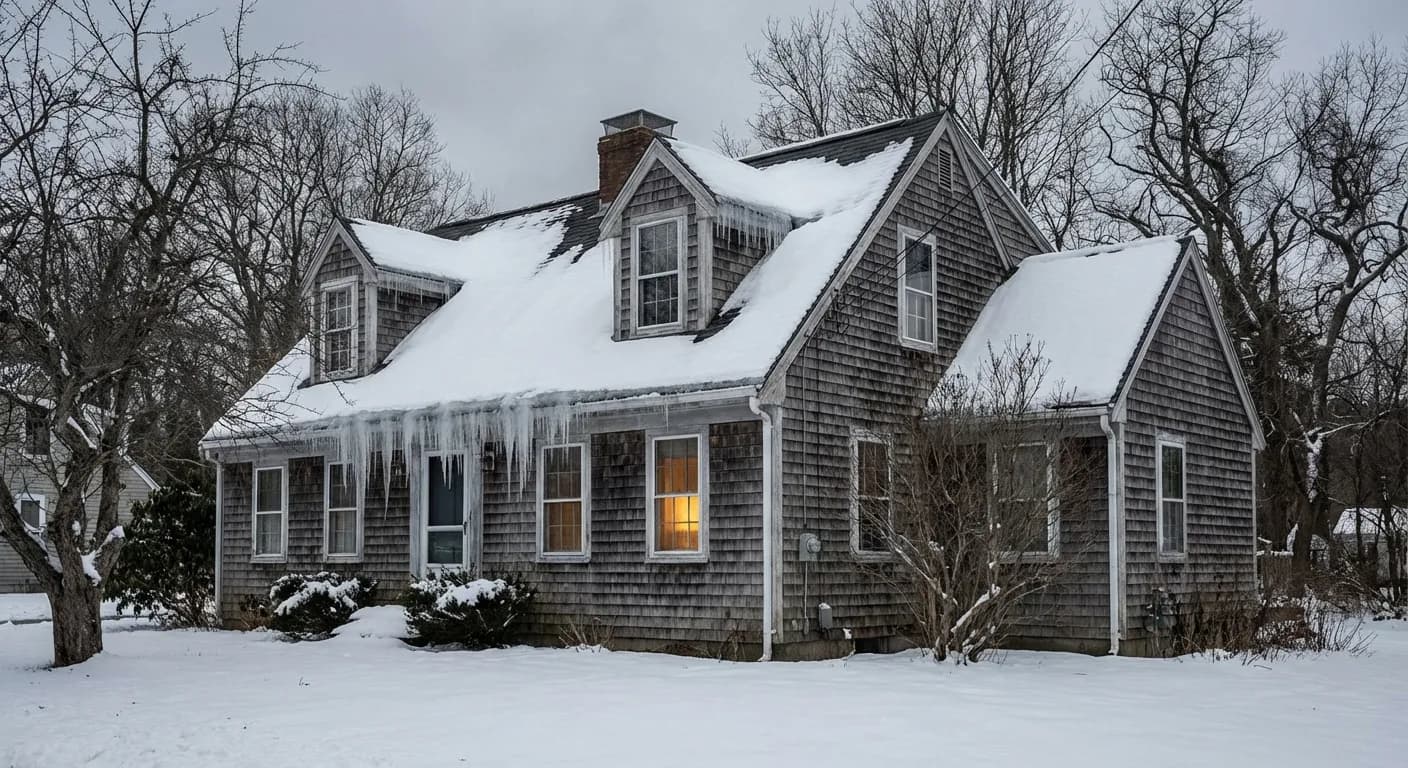
How ice dams form. An ice dam forms when heat escaping through your attic melts snow on the upper portion of your roof. That meltwater runs down toward the eave, where the roof surface is colder (because it's over unheated space — like the soffit overhang). The water refreezes, building up a ridge of ice at the eave. As more meltwater accumulates behind the ice dam, it has nowhere to go but under the shingles.
What the shingle actually does. The shingle itself doesn't prevent ice dam formation — that's a function of attic insulation, ventilation, and sometimes a radiant barrier. What matters is whether your shingle and underlayment system can withstand standing water pressure when an ice dam forms. This is where ice and water shield becomes critical.
Massachusetts building code (and codes in most New England states) require ice and water shield in the first three feet from the eave. Best practice in the region extends ice and water shield 24 inches beyond the interior heated wall line — typically 6 to 8 feet up from the eave on a typical New England colonial. In valleys and around skylights, the coverage extends further.
The shingle brand matters less than the installation system. All three major brands' architectural shingles (CertainTeed Landmark, GAF Timberline HDZ, Owens Corning Duration) handle ice dam conditions when installed correctly with proper ice and water shield. The differentiation between brands on ice dam resistance is minimal. What matters far more is the quality of the installation — which brings us back to installer certification.
For bundle homeowners, the stakes are higher. If an ice dam leak penetrates your roof system, the damage doesn't stop at your ceiling. Water intrusion near a solar roof penetration — around conduit, mounting brackets, or flashings — can damage your electrical system. This is one reason why having a certified, experienced installer matters as much as having a quality shingle.
Wind Resistance Rankings for Nor'easters
When comparing shingle wind warranties, it's important to understand that these ratings reflect what the manufacturer will cover under warranty, not necessarily the point at which the shingle fails. All three brands' architectural shingles are designed to handle significant wind — the warranty number represents the threshold at which the manufacturer accepts responsibility for damage.
Here's how the Big 3 rank on wind resistance for New England conditions:
1. GAF Timberline HDZ with WindProven accessories — Unlimited wind speed warranty. GAF's unlimited wind warranty requires two things: their WindProven wind-rated accessory package and installation by a GAF-certified contractor. When both conditions are met, GAF will cover wind damage at any wind speed — there is no maximum. For coastal New England homes where nor'easters regularly produce damaging winds, this is genuinely the strongest warranty available. The LayerLock technology in the Timberline HDZ also improves wind uplift resistance mechanically.
2. Owens Corning Duration with SureNail technology — 130 mph warranty. OC's SureNail Technology features a patented reinforced nailing strip that provides a visual target for installers and creates a stronger mechanical connection between the shingle and the roof deck. The result is a 130 mph wind warranty — second only to GAF's unlimited coverage. For most non-coastal locations in New England, 130 mph is more than sufficient.
3. CertainTeed Landmark — 110 mph standard, upgradeable to 160 mph. CertainTeed's standard wind warranty on the Landmark is 110 mph. However, when installed by a ShingleMaster PREMIER contractor using proper installation methods, the wind warranty upgrades to 160 mph — putting it well above Owens Corning's 130 mph and competitive with all but GAF's unlimited coverage. Through a credentialed installer like Global Roofing, CertainTeed's wind protection is more than adequate for even the most exposed New England locations. Combined with CertainTeed's 25-year algae resistance, 21 color options, and SureStart PLUS warranty scaling, the 160 mph wind upgrade makes Landmark our overall top pick.
The coastal recommendation: For homes on Cape Cod, the South Shore, Narragansett Bay, or the Connecticut shoreline where sustained nor'easter winds regularly exceed 60-70 mph, GAF Timberline HDZ with WindProven is the defensible choice for wind resistance. The unlimited warranty provides genuine peace of mind in exposed locations.
Freeze-Thaw Durability
This is one area where the Big 3 are essentially equal — and where the honest answer is "brand matters less than installation quality."
All three manufacturers' architectural shingles are designed and tested for freeze-thaw conditions. They meet or exceed ASTM D7158 (wind resistance) and ASTM D3462 (physical properties) standards. The fiberglass mat construction used by all three brands provides dimensional stability in cold temperatures and resistance to cracking at the granule layer.
The key factors for freeze-thaw performance are:
- Fiberglass mat strength: Prevents the shingle from deforming under thermal stress. All three brands use high-quality fiberglass mats in their architectural lines.
- Asphalt flexibility: The asphalt coating must remain flexible at low temperatures rather than becoming brittle. All three brands' architectural shingles are formulated for this.
- Granule adhesion: Poor granule adhesion accelerates wear in freeze-thaw conditions as temperature cycling loosens granules over time. This is more of an installation and storage issue than a brand differentiation.
For New England homeowners, the freeze-thaw comparison between these brands is largely a wash. Focus your comparison on the factors where these brands genuinely differ: color options, wind warranty, algae resistance, and — most importantly — what your installer's certification unlocks in terms of warranty coverage.
Algae Resistance for Humid Summers
New England's summers have become warmer and more humid over the past two decades, creating conditions that accelerate the growth of Gloeocapsa magma — the algae responsible for the black streaking you see on north-facing and shaded roof surfaces. Algae doesn't structurally compromise your shingles, but it's visually significant and can reduce perceived home value.
Here's how the brands compare on algae resistance:
1. CertainTeed StreakFighter — 25-year algae resistance warranty. CertainTeed's StreakFighter technology uses copper granule release to inhibit Gloeocapsa magma algae growth for 25 years. This is a full quarter-century of protection against the black streaking that affects north-facing and shaded roof surfaces across New England.
1. GAF StainGuard Plus — 25-year algae resistance warranty (tied). GAF's copper-based granule technology provides the same 25-year algae resistance coverage as CertainTeed. Both brands lead the industry on algae protection.
3. Owens Corning StreakGuard — 10-year algae resistance warranty. OC's StreakGuard provides less than half the algae coverage of CertainTeed or GAF — a meaningful gap for New England properties with heavy shade or north-facing roof planes.
For New England homeowners, the 25-year algae resistance offered by both CertainTeed and GAF is a significant advantage over Owens Corning's 10-year coverage. If your home has a north-facing roof plane with significant shade — common in densely-treed New England neighborhoods — the 25-year protection from either CertainTeed or GAF should be a factor in your decision. The gap between 25 years and 10 years is especially relevant in a region where warmer, more humid summers are accelerating algae growth.
Color Options for New England Architecture
New England's housing stock is architecturally diverse in ways that matter when choosing a shingle color. Colonial farmhouses with white clapboard siding, Victorian painted ladies in deep saturated colors, natural-shingle Cape Cod cottages, stone-faced Federal-style homes, and contemporary new construction all have different aesthetic needs for roofing.
Color availability matters more in New England than in regions with more homogeneous housing stock — and here the gap between brands is significant.
Rankings:
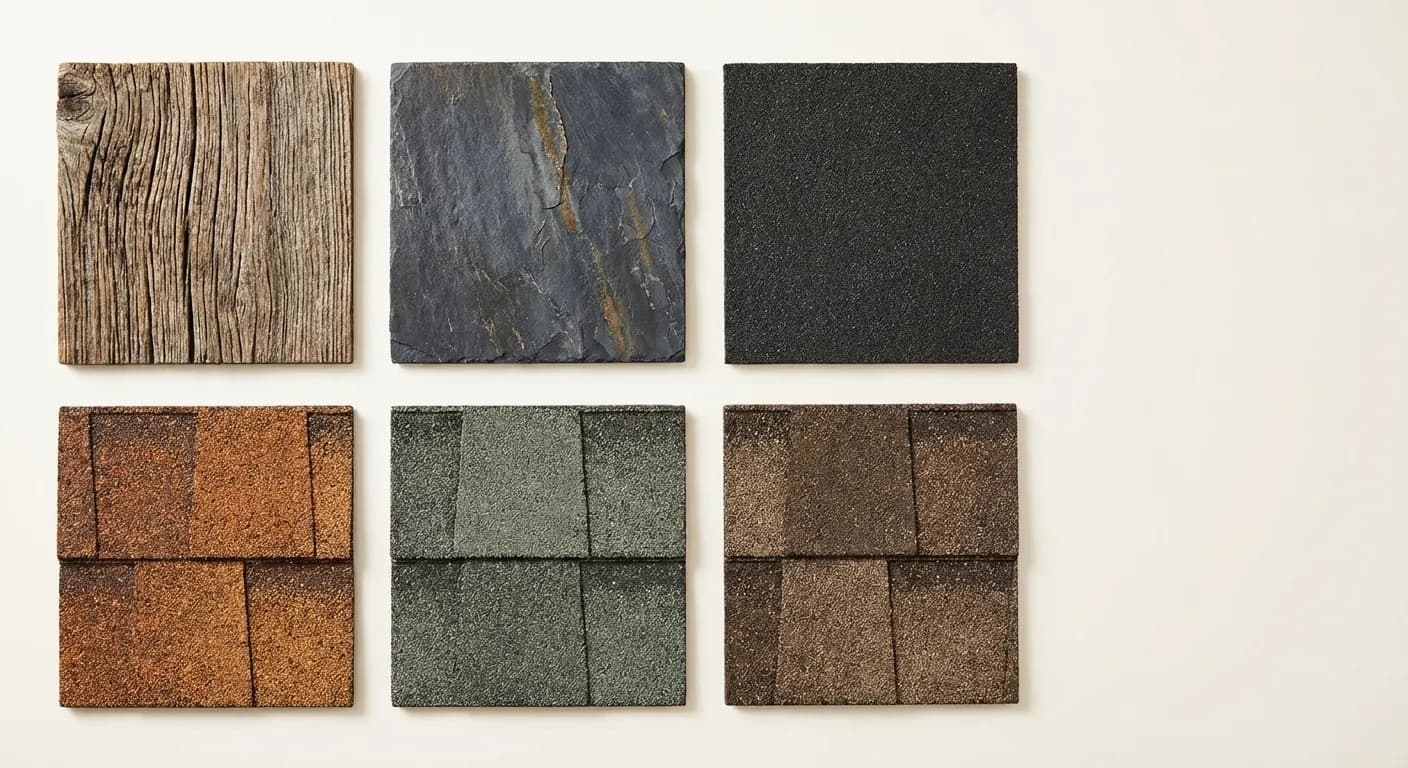
- CertainTeed Landmark — 21 color options. The widest palette of any major architectural shingle brand. Colors include Weathered Wood (the perennial best-seller), Colonial Slate, Georgetown Gray, Burnt Sienna, Moire Black, Heather Blend, and many others across warm, cool, and neutral tones. The breadth of this palette is critical for matching New England's diverse architectural styles.
- GAF Timberline HDZ — 12 color options. A solid range covering the major color families — Weathered Wood, Charcoal, Hickory, Shakewood, and others. A good selection for most applications, but noticeably narrower than CertainTeed's offering.
- Owens Corning Duration — 11 color options. A comparable range to GAF, with some unique options including Onyx Black and Desert Tan. Good selection but fewer choices than CertainTeed.
CertainTeed's 21-color advantage is nearly double the competition. For New England homeowners restoring period homes, working with a historic district, or simply wanting the best possible visual match for their specific siding color, the broader palette provides options that GAF and OC simply don't offer.
Color affects perceived home value at resale. A roof color that clashes with the home's exterior is noticed by buyers — and priced into offers. Getting the color right is worth paying attention to.
Impact Resistance for Hail and Storm Debris
Class 4 impact resistance — the highest rating under UL 2218 testing — represents a shingle's ability to withstand the impact of a 2-inch steel ball dropped from 20 feet without cracking, tearing, or fracturing.
All three major brands offer Class 4 impact-resistant options in their product lines:
- CertainTeed Landmark IR — Class 4 impact rating, same color options and warranty structure as standard Landmark
- GAF Timberline AH (ArmorShield II) — Class 4 impact rating, similar to Timberline HDZ in appearance
- Owens Corning Duration FLEX — Class 4 impact rating, polymer-modified asphalt for additional flexibility
For New England homeowners, Class 4 impact resistance is most relevant in:
- Western Massachusetts and the Pioneer Valley — where severe thunderstorms and hail are more common
- Northern Connecticut — similar severe weather exposure
- Any property with large trees overhead — storm-dropped branches and debris
Insurance incentive: Many homeowner insurance carriers offer premium discounts for Class 4 impact-resistant roofing. The discount varies by carrier and state, but in some cases can offset a meaningful portion of the premium cost differential. Check with your carrier before your installation to see if the Class 4 designation qualifies for a discount in your policy.
On impact resistance, all three brands are effectively tied — the Class 4 rating covers the same performance threshold. Choose the brand that wins on your other priority factors, then request the impact-resistant product line if it's relevant to your location.
Our Rankings: Best Shingles for New England
Based on our analysis of the factors that matter most in New England conditions, here are our rankings for 2026:
Best Overall for New England: CertainTeed Landmark
CertainTeed Landmark earns our top overall recommendation for New England homeowners based on three core advantages:
- Color selection (21 options): Nearly double the competition, critical for matching New England's diverse architectural styles. Whether you're restoring a historic colonial, refreshing a Cape Cod cottage, or building new construction, CertainTeed's palette has the closest match.
- SureStart PLUS warranty architecture (Standard/3-STAR/4-STAR/5-STAR): The only major brand with a four-tier SureStart PLUS system. A CertainTeed Landmark installed by a ShingleMaster PREMIER contractor (the highest CertainTeed tier, launched January 2026) unlocks SureStart PLUS 5-STAR: 50 years non-prorated for Materials, Labor, Tear-Off & Disposal, plus 30-year workmanship — the longest non-prorated warranty coverage available from any major manufacturer.
- Heritage (120+ years): CertainTeed has been manufacturing roofing products continuously since 1904. That track record of product development and quality consistency is meaningful for a product that will be on your home for 25-30 years.
Best for: Most New England homeowners, especially those bundling with solar through a CertainTeed-certified installer.
Best for Coastal and High-Wind Areas: GAF Timberline HDZ
For homes on Cape Cod, the South Shore of Massachusetts, Narragansett Bay in Rhode Island, or the Connecticut shoreline — where nor'easters regularly deliver damaging winds — GAF Timberline HDZ with WindProven accessories earns our coastal recommendation.
The unlimited wind speed warranty is genuinely the strongest available from any major manufacturer. When combined with GAF's 25-year StainGuard Plus algae resistance (matching CertainTeed's 25-year StreakFighter coverage), the Timberline HDZ offers a compelling package for exposed coastal properties where wind is the primary concern.
Best for: Cape Cod, South Shore MA, RI coast, and CT shoreline homes in direct nor'easter exposure. Properties with significant shade or north-facing slopes where algae resistance matters.
Best Workmanship Coverage: Owens Corning Duration with Preferred Contractor
Owens Corning's Duration shingle through a Preferred contractor offers a lifetime workmanship warranty — technically the longest term of any major manufacturer. Important caveat: this workmanship warranty expires immediately upon home sale and does not transfer to the new owner. CertainTeed's SureStart PLUS 5-STAR (30-year workmanship, transferable within 20 years) and GAF's Golden Pledge (25-year workmanship, transferable within 20 years) both provide transferable workmanship coverage — a meaningful advantage for homeowners who may eventually sell.
OC also offers SureNail Technology — a patented reinforced nailing strip that improves wind uplift resistance and provides a visible target for installers — and a 130 mph wind warranty with this system. The products themselves are excellent; the workmanship transferability gap is a warranty structure consideration, not a product quality issue.
Best for: Homeowners who will remain in their home long-term and can verify their installer holds Preferred contractor status.
Note on Budget Options
All three brands' architectural shingle lines are priced in a similar range — typically $90 to $130 per square for material only (a "square" equals 100 square feet of roof coverage). The price difference between a CertainTeed Landmark, GAF Timberline HDZ, and OC Duration at the material level is typically $5 to $15 per square — meaningful on a full roof, but not the primary driver of total project cost.
The real cost difference in roofing comes from installation quality and certification level, not shingle brand. A lower material cost from a lesser-known brand rarely saves money if it means forgoing the enhanced warranty coverage that certified installation unlocks.
What This Means for Solar Bundle Homeowners
If you're reading this guide because you're planning to bundle a new roof with solar panels, the shingle decision takes on additional significance. Here's why:
Your shingle is the foundation for a 25-year investment. A residential solar system is typically warrantied for 25 years — sometimes 30. Your solar panels will be mounted on that roof for the entire warranty period. If your shingles fail or develop installation-related issues before year 25, the repair process isn't just a roofing project — it also involves removing and reinstalling your solar panels.
Solar panel removal and reinstallation is expensive. A solar removal and reinstall (R&R) typically costs $3,000 to $10,000 depending on system size, roof complexity, and labor rates in your area. This cost is not covered by your solar warranty (which covers the panels, not the installation labor for a secondary roof repair). It's also not typically covered by a standard shingle warranty unless you have enhanced coverage through a certified installer.
The math on certification-based warranty coverage. If you have a CertainTeed Landmark installed by a ShingleMaster PREMIER contractor (SureStart PLUS 5-STAR), your 50-year non-prorated coverage extends well beyond the life of your solar system. An installation-related issue in year 15 — a common peak time for flashing failures and installation errors to manifest — would be covered under the SureStart PLUS warranty, including materials, labor, tear-off, and disposal, at $0 out-of-pocket. With an uncertified installer's 10-year standard warranty, that same issue at year 15 is entirely out-of-pocket — and on a $15,000 roof, the standard prorating formula would leave a homeowner paying $3,000+ even if the claim were made during the non-prorated period.
Evergreen Solar uses their sister company, Global Roofing (getglobalroofing.com), for all roofing installation work. Global Roofing holds CertainTeed ShingleMaster PREMIER certification — one of the few companies in New England with this credential — which means Evergreen Solar customers receive SureStart PLUS 5-STAR warranty coverage on their CertainTeed Landmark shingles: 50 years non-prorated for Materials, Labor, Tear-Off & Disposal, plus 30-year workmanship. This is one of the reasons Evergreen Solar consistently scores highly in our rating methodology's warranty and installation quality categories.
For the full breakdown of how installer certification affects your warranty across all three major brands, see our companion guide: Why Your Roofer's Certification Matters More Than the Shingle Brand.
Ready to Find the Right Shingle for Your New England Home?
Get matched with a certified installer serving your area — we connect you with pre-vetted companies that carry the shingle brands and certifications discussed in this guide.
Get Matched Free →The Bottom Line
New England demands more from your roofing shingles than most regions. Ice dams, nor'easters, 100+ annual freeze-thaw cycles, coastal salt air, and increasingly humid summers create a performance gauntlet that not every shingle system handles equally well.
Based on our analysis, here's the summary:
- Best overall: CertainTeed Landmark — 21 color options, SureStart PLUS 5-STAR (50yr non-prorated + 30yr workmanship via ShingleMaster PREMIER), 120+ years of manufacturing heritage. Our top recommendation for most New England homeowners.
- Best coastal: GAF Timberline HDZ with WindProven — unlimited wind warranty for exposed coastal locations. Note: CertainTeed Landmark also reaches 160 mph through ShingleMaster PREMIER installation and matches GAF's 25-year algae resistance.
- Best workmanship coverage (for permanent residents): Owens Corning Duration with Preferred contractor — lifetime workmanship warranty, though this coverage does not transfer to new owners on home sale.
For all three brands, the most important variable isn't the shingle — it's the installer's certification level and what warranty that certification unlocks. Prioritize wind resistance for coastal locations, ice dam compatibility for all New England homes, color options for curb appeal and resale value, and certification-based warranty coverage for long-term protection.
For the complete head-to-head data on all comparison categories — warranties, certifications, color options, algae resistance, and more — see our CertainTeed vs. GAF vs. Owens Corning full comparison. To understand how installer certification affects your warranty, read our guide on why roofer certification matters more than the shingle brand.
Serving Massachusetts, Connecticut, and Rhode Island homeowners — we connect you with pre-vetted companies that install the shingle brands covered in this guide. Get matched with a certified installer and start your roof + solar bundle project with confidence.
Find the Right Company for Your Home
Our free matching service connects New England homeowners with top-rated roof + solar companies. Get a no-pressure consultation with a company that serves your area.
Get Your Free ConsultationFree · No obligation · Serving MA, RI, CT, Southern NH & NJ
About the Author
Diana Kowalski
Home Improvement Editor
Diana Kowalski has covered roofing materials, installation standards, and contractor evaluation for regional home improvement publications across New England for over a decade. She evaluates roof quality and installation practices for every company reviewed on this site.
Related Guides
How Roof + Solar Bundles Work: A Complete Guide for New England Homeowners
A roof + solar bundle combines a full roof replacement with a solar panel installation into a single project, single contractor, and often a single financing agreement. Here's everything you need to know before your consultation.
Why Your Roofer's Certification Matters More Than the Shingle Brand
Most homeowners obsess over which shingle brand to choose — but the installer's certification often matters more. Here's how contractor credentials affect your warranty, your coverage, and your long-term protection.
Ready to Get Started?
You've done your research. Now get matched with a top-rated New England roof + solar company for a free, no-obligation consultation.
Get Matched with a Top CompanyFree · Fast · No pressure · Serving MA, RI, CT, Southern NH & NJ